If you have started getting quotes for a renovation or new build in Cape Town, you have probably seen contractors mentioning NHBRC registration. But what does it actually mean, how much protection does it really give you — and how do you check that the builder in front of you is telling the truth?
The checking part takes about five minutes and almost nobody does it. This guide covers what the registration is, what it covers, and then walks through verifying a builder on the NHBRC public register step by step.
What Is the NHBRC?
The NHBRC is the National Home Builders Registration Council, a statutory body set up under the Housing Consumers Protection Measures Act of 1998. Its job is to protect home owners from poor workmanship by regulating the people who build homes in South Africa. In practice it does three things: it registers builders, it enrols new homes, and it inspects construction to make sure it meets the required standards.
What NHBRC Registration Actually Means
When a contractor says they are "NHBRC registered", it means they have applied to the Council, met its criteria and been issued a registration number that is renewed every year. Registration is a signal that the builder has demonstrated a baseline of technical and financial competence — it is not a once-off badge, and a lapsed registration is easy to miss.
Registration of the builder is separate from enrolment of the home. By law, a builder must enrol every new home with the NHBRC before construction starts. Enrolment is what activates the warranty that protects you, so both pieces matter.
The Warranty Protection You Get
The reason enrolment matters so much is the warranty cover that comes with it. On an enrolled new home the builder is responsible for:
5 years
Major structural defects
Cover runs for five years after completion of the home.
12 months
Roof leaks
Where the leak is caused by workmanship.
3 months
Minor and non-structural defects
The shortest of the three cover periods.
If the builder fails to fix a covered defect — or has since disappeared — the NHBRC warranty scheme can step in. Without enrolment, you have none of this protection and would be left to pursue the builder yourself.
Does It Apply to Renovations?
This is where a lot of Cape Town home owners get confused. The NHBRC framework is aimed squarely at new homes and major additions such as a new second storey or a substantial extension, which generally must be enrolled. Smaller renovations — a bathroom upgrade, repainting, or minor repairs — usually fall outside the enrolment requirement. Even then, working with a registered contractor is a good sign that you are dealing with a professional rather than a fly-by-night operator.
Why It Matters When Choosing a Contractor
NHBRC registration should not be the only thing you look at, but it is a useful filter. A registered contractor has been vetted, is accountable to a regulator, and — for new builds — gives you enrolment and warranty cover you cannot get any other way. Alongside registration, still ask for:
- Proof of current, valid NHBRC registration (check the number, not just the claim).
- Confirmation that your new home or major addition will be enrolled before work begins.
- References and recent local projects you can see or speak about.
- A clear, written quotation and scope of work.
How to Check if a Builder Is NHBRC Registered
To check that a builder is NHBRC registered, ask for their NHBRC registration number, search that number on the NHBRC Builder Verification tool at eservices.nhbrc.org.za, then phone the NHBRC on 0800 200 824 to confirm the registration has not lapsed. For a new home or a major addition, confirm separately that your own project has been enrolled. The whole check takes about five minutes, and almost nobody does it. Do it before you pay a deposit, not after.
-
01
Ask for the registration number
Any registered builder can give it to you on the spot. Hesitation here tells you most of what you need to know.
-
02
Search the public register
The NHBRC runs a free Builder Verification tool. Searching by registration number is more reliable than searching by name.
-
03
Phone to confirm it is current
The register tells you the builder exists. A call confirms the registration has not lapsed for unpaid annual fees.
-
04
For a new build, check enrolment
Registration of the builder and enrolment of your home are two separate things, and only one of them protects you.
Step 1: Ask for the registration number
Start by asking the contractor directly for their NHBRC registration number. A registered builder will have it to hand and will not mind being asked — it is a number they use constantly. Evasiveness, a promise to send it later that never arrives, or an offer to show you a certificate instead of giving you the number are all worth paying attention to.
Step 2: Search the NHBRC public register
The NHBRC runs a free Builder Verification tool at eservices.nhbrc.org.za. It asks you to search by one of two things: registration number or company name.
Search by the registration number if you have it. This is the single most useful piece of advice on this page, because the name search is stricter than people expect. The NHBRC's own instruction on that page is to enter the company name exactly as it appears on the certificate, matching spelling, punctuation and spacing. Searching for "ABC Builders" when the certificate reads "A.B.C. Builders CC" returns nothing at all — and a blank result reads exactly like a builder who is not registered, when in fact you have just typed the name slightly differently.
If the number returns nothing either, that is a genuine problem. Raise it with the contractor before drawing conclusions, since transcription errors happen, but do not proceed on the strength of a claim the register does not support.
Step 3: Phone the NHBRC to confirm it is current
Finding the builder on the register tells you they have been registered. It does not, on its own, tell you the registration is still active. Registration is renewed annually and lapses when the fees are not paid, which is the single most common way a genuinely-once-registered builder ends up without cover.
The NHBRC toll-free line is 0800 200 824, staffed 08:30 to 16:30 on weekdays and closed on weekends and public holidays. Give them the registration number and ask whether it is current. If you would rather have something in writing, or you want to ask whether complaints have been logged against the builder, every province has an NHBRC office you can walk into during working hours.
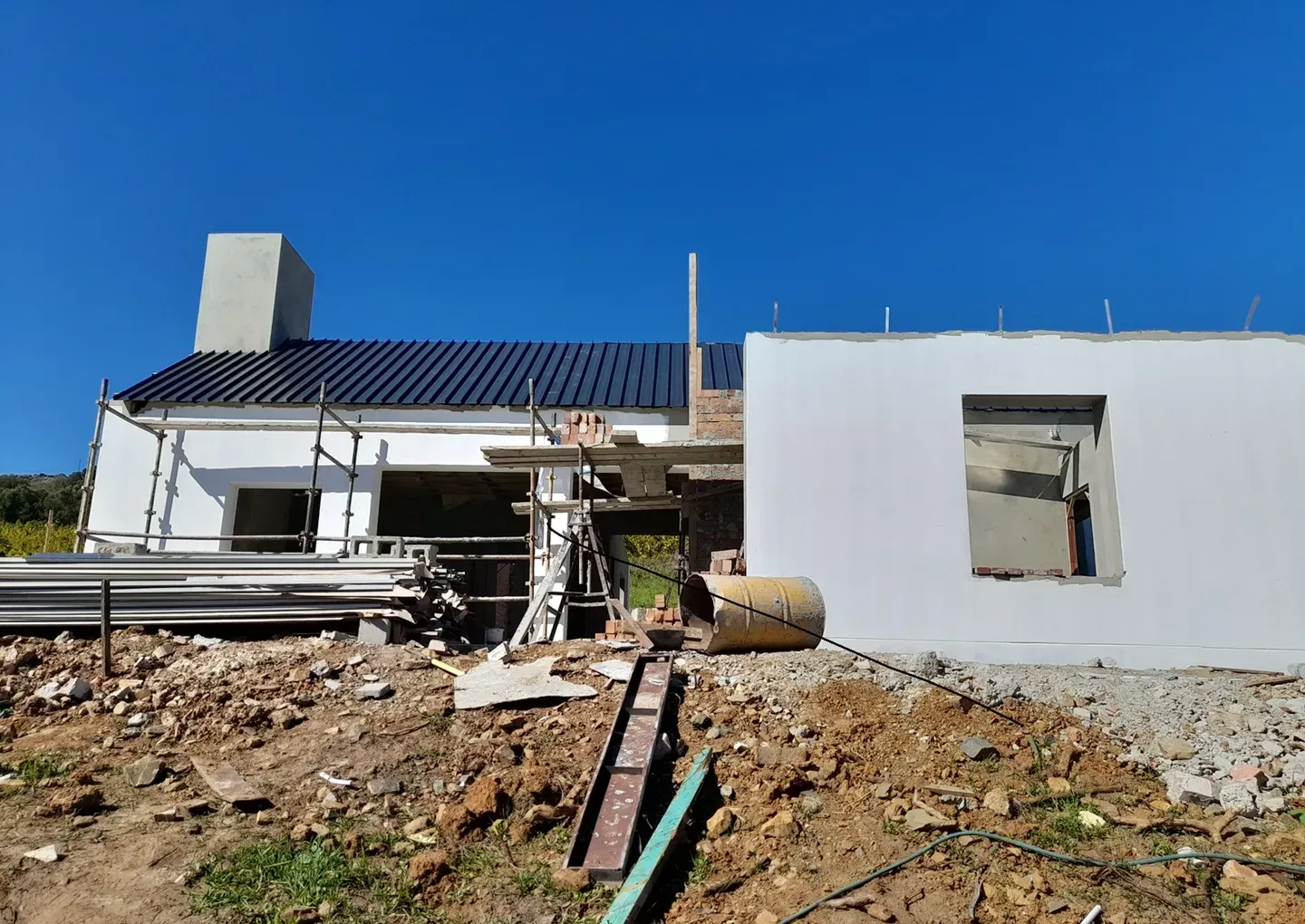
On a new home, the builder's registration is only half the check — the house itself has to be enrolled before construction starts.
Step 4: For a new build, check the enrolment separately
This is the check people miss, because it sounds like the same thing and is not. Registration applies to the builder. Enrolment applies to your specific house. A properly registered builder can still fail to enrol your home, and if that happens you have hired a vetted contractor and received none of the warranty protection.
For a new home or a major addition, ask to see confirmation that your project has been enrolled, and ask for it before the first spade goes into the ground. Enrolment is what activates the five-year structural cover described above. It cannot be applied retrospectively once the build is underway.
Why a certificate on its own is not enough
Contractors will often offer a printed or photographed registration certificate, and it is worth seeing. But treat it as a starting point rather than proof. Because registration renews every year, a completely genuine certificate can be two years old and describe a registration that has since lapsed. The certificate gives you the number; the register and the phone call tell you whether the number still means anything today.
What to do if they are not registered
The answer depends on what you are building, and it is worth being precise rather than alarmist.
For a new home or a major structural addition, an unregistered builder is not a lawful option and there is nothing to negotiate. Walk away. For a smaller renovation — a bathroom, repainting, general repairs — an unregistered builder is not breaking the law, because the enrolment requirement does not reach that work. What you are giving up is the warranty scheme and a regulator to escalate to if the job goes wrong. That may be an acceptable trade for a small job with a builder you know and can check by reputation. It is a poor trade on anything substantial.
Where a contractor has actively claimed registration they do not hold, that is a misrepresentation rather than a technicality. The NHBRC operates a fraud hotline on 0800 203 698. Get the claim in writing if you can, keep the number they gave you, and report it — the next home owner they quote will not think to check.
Red Flags When Hiring a Building Contractor in Cape Town
Beyond NHBRC registration, there are several other warning signs to watch for:
- They can't produce a registration number. Any registered contractor can provide their NHBRC registration number immediately. Hesitation or vague answers here are a significant red flag.
- No formal written contract. A reputable contractor will always provide a detailed written contract covering scope of work, materials, payment schedule, and timeline. Verbal agreements offer you no protection.
- They ask for large upfront payments. A reasonable deposit (typically 10–20%) is normal. Requests for more than 30–40% upfront, especially before work has started, are a warning sign.
- No building plans for significant work. If a contractor proposes to build an addition, second storey, or new structure without obtaining approved building plans from the City of Cape Town first, walk away. This is illegal and will create serious problems when you try to sell.
- Unusually low quotes. A quote significantly below all others often signals that the contractor is cutting corners — on materials, on labour quality, or on compliance processes. Getting three quotes is sensible; accepting the lowest without scrutiny is risky.
What It Means When 68 Projects Says We're NHBRC Registered
When we tell you that 68 Projects Building Co is NHBRC registered, it means we have passed the NHBRC's technical assessment, we maintain active annual membership, and every qualifying project we undertake is enrolled with the NHBRC before work begins.
It means you have the protection of the three-tier warranty scheme on your project. It means NHBRC inspectors have visibility into the stages of your build. And it means you're dealing with a contractor that is legally compliant, financially vetted, and technically assessed by an independent government body.
Our co-owners bring decades of construction experience to every project, and our NHBRC registration is part of a broader commitment to doing things properly — from plans approval to site safety to final handover.
Building With Confidence in Cape Town
At 68 Projects Building Co we work to the standards the NHBRC exists to protect, whether you are planning a home extension, a second storey addition or a full renovation. Registration and enrolment are there to give you peace of mind — understanding them helps you hire the right team and avoid costly surprises later. If you have questions about your project and how it is covered, get in touch and we will walk you through it.
Talk to Us Before You Start
If you're planning a renovation, new build, or addition in Cape Town's Southern and Northern Suburbs, we're happy to talk you through what your project involves, what the compliance requirements are, and what it will realistically cost and take.
There's no obligation — just an honest conversation with an experienced, registered building contractor who's worked on projects across Claremont, Rondebosch, Plumstead, Newlands, Constantia, and beyond.